


The Cost of Speaking Up
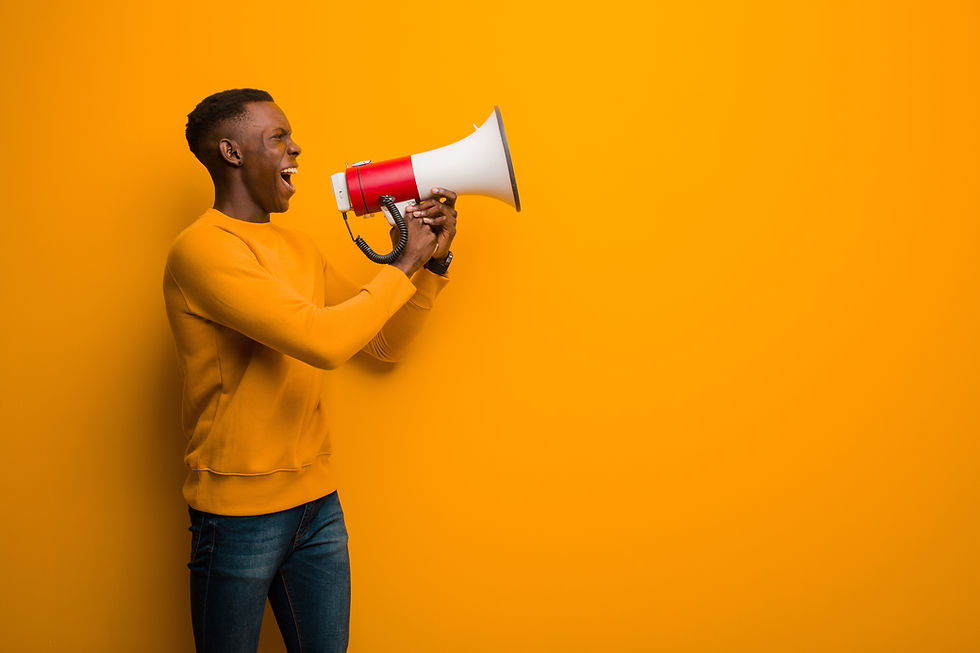
When I was invited to write this article, one of the suggested topics was The Cost of Speaking Up. As a socio-political analyst and commentator whose work often teeters at the edge of that question, this is not unfamiliar ground for me. The risks of speaking are easy to list. In contemporary India, consequences of dissent are well established. Journalists have been charged under UAPA and sedition. Activists have faced detention without trial, and newsrooms operate under financial and regulatory harassment. The risks of speaking are visible, immediate, and at times deliberately made so.
Even so, the premise felt incomplete. It occurs to me that perhaps the more urgent question is the cost of NOT speaking up. What happens when we see injustice, and choose to look the other way? And what, over time, does that silence do – not just to those who bear the harm, but to us, when we choose silence?
To understand this, it is useful to begin where speech is most explicitly tied to public accountability: the media.
In a democracy, the media is the Fourth Estate, tasked with holding state institutions accountable and protecting the public’s right to information. But this role does not operate in a vacuum. It depends on the same political, financial, and regulatory systems the media is expected to challenge. In the best of times, this creates a negotiation between what is necessary to report and what is possible to report. But in polarised times, this balance gives way to outright pressure.
For those of us who work in this space of public writing, the calculation is constant. To write in a polarized world is to know that your words will be interpreted socially before they are understood intellectually. Before a paragraph is understood for its substance, it is it is read as a position, judged for which “side” it belongs to, who it serves, and who it opposes. Under these pressures, editors may push for safer topics or softer framing, especially on difficult issues, and writers begin to adjust.
At first, the shift is subtle. Language becomes more cautious; framing becomes deferential, and assertions soften into questions. Over time, writers start anticipating backlash before they’ve even finished a draft, self-censoring their thoughts. In many newsrooms, this is not a matter of editorial preference, but risk calculation. Aggressive reporting can invite legal notices, harassment, or withdrawal of funding. Often, sensitive stories are not pursued. Difficult questions are not asked. Entire areas of inquiry fall away, and safe topics are preferred. Only a small minority of reporters persist despite the risk. Technically, it’s not false reporting. But it is incomplete. And incomplete information, presented as the whole picture, distorts public understanding just as effectively as misinformation. A public cannot meaningfully exercise its rights if it only receives half-information.
These dynamics are not confined to journalism or public life. They travel across institutions and in everyday interactions. In that sense, silence is not passive, it is participatory. We see this in workplaces, in meetings where an inappropriate comment is brushed aside, or in the awkward silence after a remark that clearly crosses a line. We see it in decisions where discrimination is cloaked as “professionalism.” In such settings, silence functions as permission. Over time, accumulated incidents seep into culture. The same pattern is mirrored at the level of institutions, governments, societies and states. When actions that disadvantage certain communities are met with indifference, they signal what can be tolerated. History shows that injustices rarely arrive fully formed; they grow gradually where they are not challenged.
It is easy, in these moments, to underestimate what silence is doing. It can feel like restraint. Like choosing your battles. Like protecting your position, your relationships, your safety. And sometimes it is. Because the truth is that speaking out carries risk. It can jeopardize careers, strain relationships, and invite retaliation. I understand that instinct well. The costs are real, and they depend on who you are, where you stand, and how easily you can be made vulnerable. Not all silence, then, is the same. From that perspective, silence under threat can be understood as a response to constraint or oppression, rather than an ethical deficiency.
And yet, even with these distinctions, the cost of silence does not disappear. For those not immediately exposed to risks to livelihood, safety, or institutional standing, there is a less visible, yet deeply personal cost. To remain silent in the face of something we know is wrong requires a kind of internal negotiation. It asks you to ignore what you know, or to treat it as less urgent than it is. We justify, we rationalize, we defer. But over time, these small acts of compromise accumulate.
What we lose first is clarity. The line between what feels acceptable and what does not, begins to blur. What was once clearly objectionable becomes debatable, then negotiable, and then easy to dismiss. Self-trust soon follows. When you repeatedly override your own judgment, you begin to doubt it. The instinct that says “this isn’t right” grows quieter each time it is ignored. Eventually, it is not that we no longer see the problem, it is that self-censorship becomes our default setting. With this, we find we have weakened something else: our courage.
And finally, character. Where we might once have thought, “I’ll speak if something feels off,” we now think, “it’s probably not worth it.” Integrity is not lost in a single moment; it is worn down gradually in the choices we do not make. It is this loss that is perhaps the hardest to reconcile with, because it changes how we see ourselves.
The shared consequence of this is a lowered world. Discrimination, misuse of power, and unfair treatment don’t persist because no one sees them, rather because people see them but don’t intervene. This is the space that oppressors thrive in; where silent complicity emboldens injustice. But systems built on silence do not stay selective. They are tested on the weakest first, and each time no one steps in, the threshold shifts. And eventually, the separation collapses. The system does not remember who it was meant to spare. And by then, there is no reason to expect the silence will be interrupted.
This is not a call for reckless confrontation or for ignoring the realities of power. But I am convinced of this: the danger of allowing injustice to go unchallenged is greater.
Because silence does not just harm the oppressed. It reshapes the environment for all of us. It erodes trust, narrows what can be said and instructs us to accept less than we otherwise would.
Speaking up does not have to be dramatic to matter. It can be as simple as naming what is happening, refusing to participate in its normalisation, or standing with the dismissed. If silence is what allows harm to settle in and grow, then speaking out—however imperfectly, however cautiously—is what interrupts it.
Often, that is enough to shift the trajectory.
So, the question is not whether speaking up comes at a cost. It probably does. The question is what silence is costing us in return.
Curator's Note
This piece offers a powerful reflection on silence as an active choice, examining its ethical, personal, and societal costs. It moves beyond the visible risks of speaking up to uncover the deeper erosion of clarity, courage, and integrity that silence can bring.
About the Author


Comments